
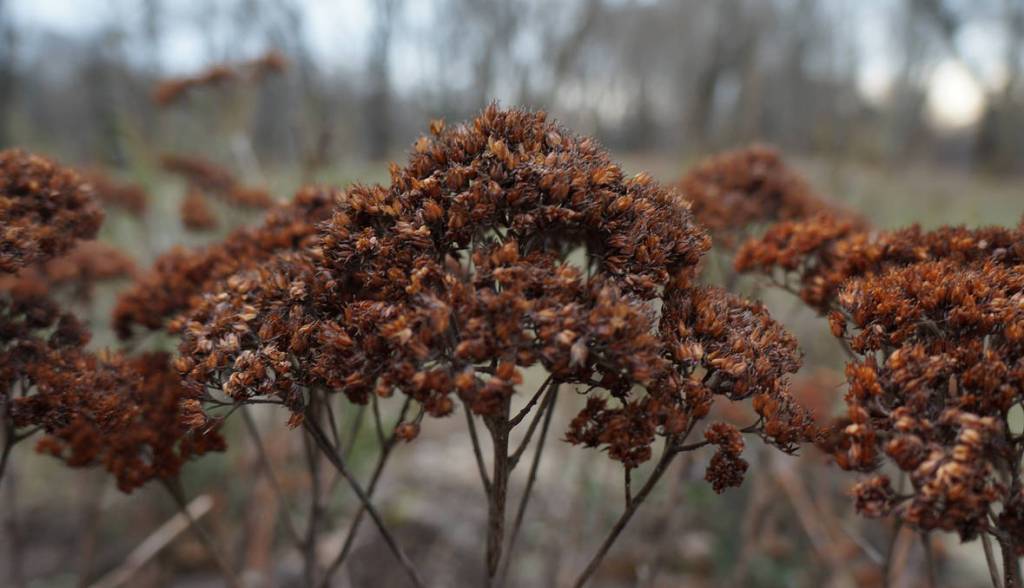
There are four seasons in a year.
Now, not everyone experiences the seasons the same in all places. If you live in the Southern hemisphere, you’re experiencing summer while the Northern hemisphere is experiencing winter. Some places have all four seasons but the nuances are muted, like places near to the equator. Some places have more pronounced winters or summers, and some places have more even seasons. Yet, everyone and everywhere has all four seasons.
I grew up in Minnesota; we joke that we have two seasons: Winter and Construction Season. While we have fall and spring, we often also talk about ‘fake spring’ as the snow can still come as late as May, even as if had a week at 80 degrees in early March. When I moved to Eastern Tennessee, I would laugh at the people complaining about the cold, until I experienced it for myself. Then I wisened up; while they didn’t have the -40 degree winter with the biting windchill and they certainly had no concept for not breathing too hard or too fast when it’s too cold out, they also didn’t know what it was to have a dry cold. I learned very quickly just how bonechilling a mild but humid winter can be; it has no regard for your bundling and seeps in regardless of what you’re wearing.
Our experience of the seasons differs depending on our history, our upbringing, our culture, our preparation, our circumstances, and our expectations.
God is wise and He has ordered creation to fit with His ways. His creation is often a teacher to me of how the Lord works. Indeed, Jesus made many comments throughout his season of teaching on ‘knowing the seasons’. He used many physical examples to teach His followers to pay attention to spiritual seasons. Here are a few examples:
- “’To what can I compare this generation? They are like children sitting in the marketplaces and calling out to others: “‘We played the pipe for you, and you did not dance; we sang a dirge, and you did not mourn.’ For John came neither eating nor drinking, and they say, ‘He has a demon.’ The Son of Man came eating and drinking, and they say, ‘Here is a glutton and a drunkard, a friend of tax collectors and sinners.’ But wisdom is proved right by her deeds.’” – Matthew 11:16-19 (NIV)
- “The Pharisees and Sadducees came to Jesus and tested him by asking him to show them a sign from heaven. He replied, “’When evening comes, you say, ‘It will be fair weather, for the sky is red,’ and in the morning, ‘Today it will be stormy, for the sky is red and overcast.’ You know how to interpret the appearance of the sky, but you cannot interpret the signs of the times. A wicked and adulterous generation looks for a sign, but none will be given it except the sign of Jonah.” Jesus then left them and went away.’” – Matthew 16:2-4 (NIV)
- “Then, leaving her water jar, the woman went back to the town and said to the people, “Come, see a man who told me everything I ever did. Could this be the Messiah?” They came out of the town and made their way toward him. Meanwhile his disciples urged him, “Rabbi, eat something.” But he said to them, “I have food to eat that you know nothing about.” Then his disciples said to each other, “Could someone have brought him food?” “My food,” said Jesus, “is to do the will of him who sent me and to finish his work. Don’t you have a saying, ‘It’s still four months until harvest’? I tell you, open your eyes and look at the fields! They are ripe for harvest. Even now the one who reaps draws a wage and harvests a crop for eternal life, so that the sower and the reaper may be glad together. Thus the saying ‘One sows and another reaps’ is true. I sent you to reap what you have not worked for. Others have done the hard work, and you have reaped the benefits of their labor.” Many of the Samaritans from that town believed in him because of the woman’s testimony, “He told me everything I ever did.” So when the Samaritans came to him, they urged him to stay with them, and he stayed two days. And because of his words many more became believers. They said to the woman, “We no longer believe just because of what you said; now we have heard for ourselves, and we know that this man really is the Savior of the world.’”- John 4:28-42 (NIV)
My experience in the Church so far in my life is that there is very little space given to dignify, honor, see, and value all seasons. Oh sure, we absolutely love our spring seasons, when we can visibly see the growth in ourselves, more people coming to our churches or exploring faith in our ministries, and we love the summers when our efforts mature and we see the fruit growing, and we love to harvest – but do we also value to seasons of leaves falling, of plants turning brown, of death and leaving unsprouted seeds (in the case of annuals), of dormancy (in the case of perennials), of letting the roots conserve energy and replenish nutrients for the next growing season? I’ll be honest; except in a few select places, namely more liturgical church spaces, I have not seen seasons of less, of death, and of dormancy mentioned – much less actively valued. Sure, we talk about needing rest, and we discuss Sabbaths, but do we give space and dignity to seasons of less, of loss, of dormancy for a person, much less for a community of people?
I think God invites His people into seasons of dormancy – individually and communally – and that this is a good part of His order for us.
Let me be clear: dormancy is not doing nothing. Dormancy is a necessary part of nature, otherwise, why could God have made the seasons of fall and winter? In seasons of dormancy, while the part of the plant that is above ground will pause its growth, the roots belowground are continuing to grow, searching deeper and wider to have access to more water, more nutrients, and to establish the plant more securely into the ground so that when it grows larger and taller, it’s harder to pull up.
Are you seeing what I’m getting at yet?
Further, if a plant were to ignore its God-made signals to go dormant in a cold season or in a drought (both common dormancy seasons), the plant would freeze in the former situation or dry up in the latter situation – both of which would lead to death for that plant.
This is to say that in dormant seasons, the right response is not to keep moving on growing aboveground as if things were the same as before, lest you overdo it and eventually have nothing to give, or worse, jeopardize your relationship with God. Let’s be honest; if you are in a season where it’s time to go dormant and you choose to keep trying to grow things, then you are depending on your own strength, and not the Lord’s. The right response in a season of dormancy is to focus efforts on going deep in Him. If aboveground was your service, your ministry, your development into new disciplines, your discipling others, your stretching and reaching and being challenged in walking out your life with God, then belowground is your formation in the Lord, like your time soaking in His Word, in prayer, in life-giving activities, in meaningful community, in growing your understanding in God, in enjoying being with Him.
There are four things to keep in mind about seasons of dormancy: learn how to discern the seasons, adjust your expectations, expect dormancy in what had been regular rhythms, and be faithful until the spring.
Learn How to Discern the Seasons:
I have always been captivated by the passage of 2 Chronicles 20, where King Jehoshaphat (one of the good kings) is anticipating an invading army that he knows his forces cannot hope to beat. So he calls together all of God’s people and has them fast and pray together, seeking the Lord earnestly. He prays a prayer that clings to God and His faithfulness, and ends with, “we do not know what to do, but our eyes are on you”. And then, they wait for the Lord to respond. (Spoiler alert: He does, and He saves them!)
This response and posture is an important window into how to discern the seasons – or the situation you’re in, however long it may be. Gather with others also in the same or similar season, cling to God’s promises, and seek Him in community until He answers or until He gives you insight. And then… obey whatever He calls you to.
Earlier, I mentioned some other passages on ‘discerning the seasons’. Jesus doesn’t want us to respond inappropriately to the season we’re in; whenever He brings up discerning the seasons, it’s because people are responding inappropriately to what is really going on. The Disciples are focusing on physical food when Jesus is trying to show them that an entire Samaritan village is about to believe in Him as the Messiah – and they’re missing it.
We often miss the bigger, deeper thing that the Lord is doing because we’re too focused on what we already know, or have learned to expect. The most important first step to discerning the season is to pause, step back, and say, “Lord, I don’t want to assume I know what’s going on or how I should respond; let me turn my eyes to You and show me how you want me to respond in this.”
Adjust your Expectations:
Look for what atypical things are growing in this season. Not everything you were already growing before will keep growing in this season, and it’s possible that different things might be growing instead. For example, when I lived in Tennessee, most of my plants went dormant in the winter, but my kale kept growing. Some things are made to thrive in winter; figure out what different thing than usual in or around you is thriving in seasons of dormancy, and feel free to let those grow! The Lord always has something for us – in every season. It is our call to seek and find what that invitation is from the Lord.
During the height of the pandemic, I had a lot of free time, but less energy because as an extrovert stuck inside, I wasn’t able to function at my best. I learned to expect less of myself and be at peace with this, even decreasing my hours at work in response to the reality of the season. Instead, I spent more time fasting and praying, and found myself in a season that I now look back on with wonder – a season of deep connectedness to the Lord and knowing what I could ask for in prayer with clarity. I saw more people healed through prayer in that time than I ever have before or since.
Expect Dormancy from what had been Regular Rhythms:
As for your normal-season growth now finding its dormancy for a season, it’s time to either cease their regular season or to not expect what had been growing to get any bigger. You might even need to expect what was going on ‘then’ to get smaller ‘now’.
Like I mentioned above, I had to decrease my work hours and my expectations of what I had energy for, because I had much less energy than usual as I couldn’t ‘fill my tank’ as an extrovert in the middle of the pandemic. And that was ok! I found contentment in this, because I knew it was out of my control, and I found joy even in the height of the pandemic. But if I had expected my rhythms to stay the same, I would have been anxious, worried, and angry – constantly blaming myself (and probably others) for not doing everything that ‘should be done’. Because my eyes were on the Lord and He allowed me to understand His expectations for me in that season of life, I could expect different things of myself and therefore could also expect different things of my supervisees in that season as well.
Are you seeing yet why it’s so important to see and change for the seasons?
Be Faithful Until the Spring:
The good news is that there is no perpetual winter. Spring will come. You cannot rush it; it will come in its own time. You must keep your eyes on God and trust that He will do it when He says it is time. If you move too soon, you risk freezing or drying up, but if you move in God’s timing, you’ll have all you need and more when it’s time for new growth.
I can say with joy that I was able to live in this way throughout the pandemic… mostly. Thank God for the grace He extended to me to have eyes to see that I needed to turn to Him and take my cues from Him daily! Because of this, because of Him, when the greatest weight of the pandemic lifted, I was in a healthy place to jump right into new growth. I did not need an extra pause to heal or to take a break from my calling, because I had not been trying to make a harvest out of a winter, or trying to grew new shoots in a drought. Friends, do not do this to yourselves. Winter has its place in your life, and it is worthy of your attention and your practice. There is dignity in winter too.
 the Kingdom Seekers Ministry